
This website is still under development


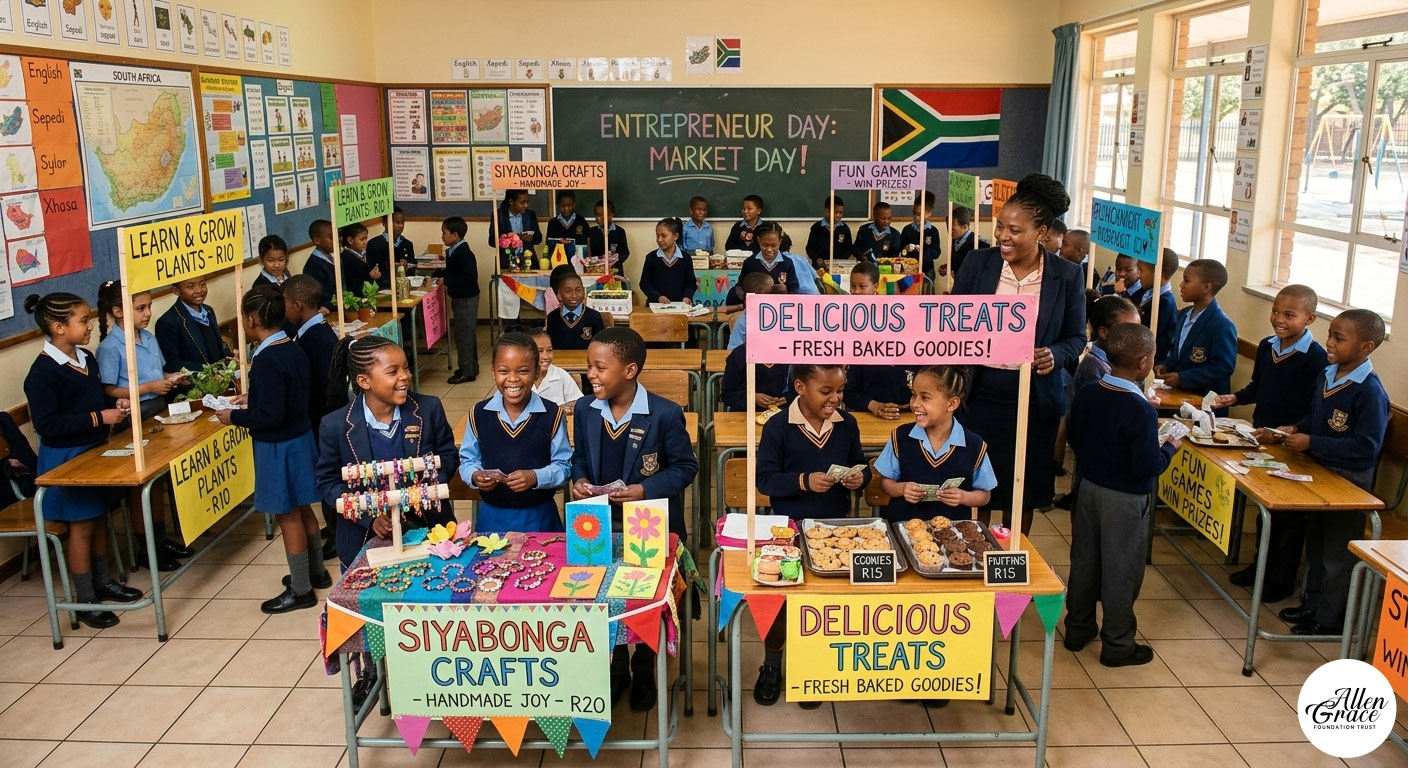

Education alone is not always enough—practical skills open doors to employment and entrepreneurship.
By combining academic support with digital and vocational training, youth gain tools to build sustainable futures.
In today’s rapidly changing world, academic knowledge alone is no longer enough to guarantee opportunity. Employers increasingly seek individuals who combine education with practical skills, digital literacy, and adaptability. For many South African youth, especially those from marginalized communities, access to these skills remains limited.
Skills development bridges the gap between education and opportunity. When learners gain computer literacy, vocational training, or artisan skills, they acquire tools that can be applied immediately in the workplace or in self-employment. These abilities open doors to industries such as construction, technology, manufacturing, and services — sectors that continue to demand skilled individuals.
Allen Grace Foundation’s approach recognises that skills development must be practical and relevant. Teaching learners how to use technology, conduct research online, or understand basic entrepreneurship equips them for the modern economy. At the same time, vocational and artisan training provides pathways for those whose strengths lie in hands-on work rather than traditional academic routes.
Skills development also fosters confidence. When young people see that they can create, repair, build, or manage something tangible, they begin to recognise their own capability and value. This sense of empowerment encourages initiative, resilience, and independence — qualities that are essential for long-term success.
By combining academic support with practical training, we help young people move from the classroom into real opportunities, whether through employment, further education, or entrepreneurship.